July 16, 2026
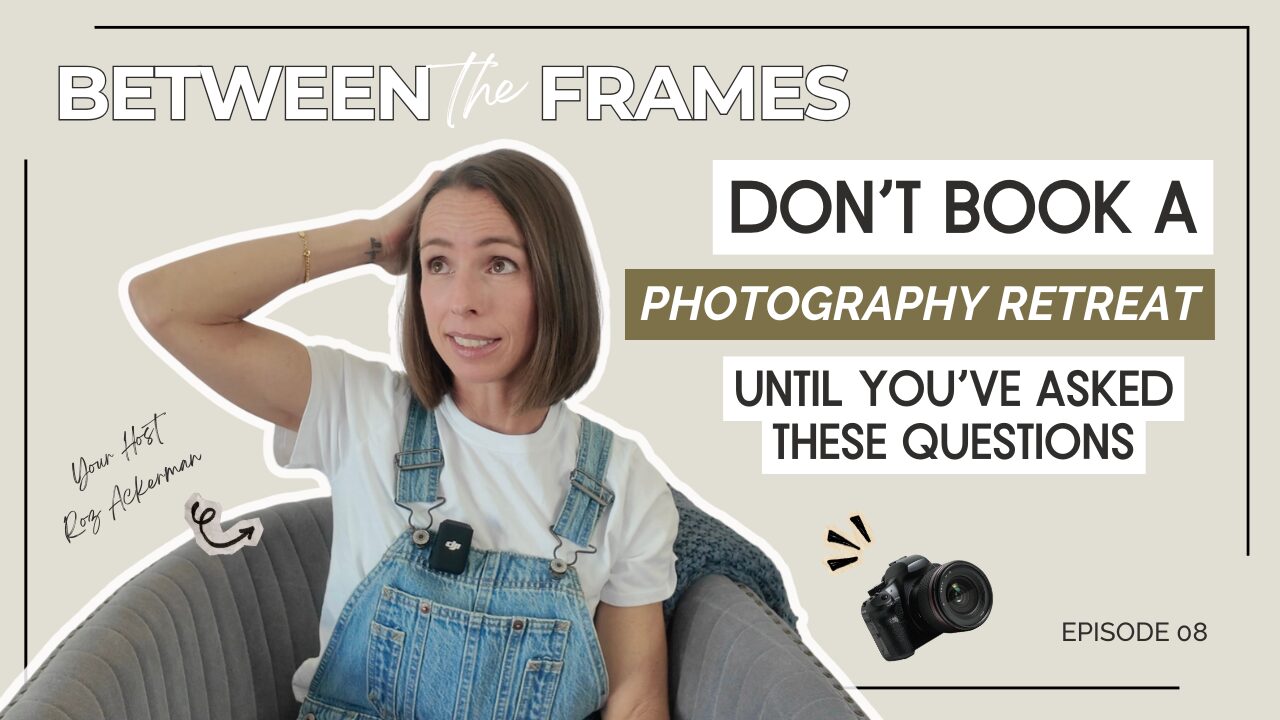
10 Questions to Ask Before Booking a Photography Retreat (From Someone Who’s Been on a lot!)
Booking a photography retreat is a real investment. It costs your money and your time — and if you’re a mom running a business, a small logistical miracle of childcare too. So before you hit that deposit button, it’s worth knowing exactly what you’re signing up for.
I’ve now attended multiple content days & four photography retreats: Savannah, Oregon, Utah, and most recently a wildflower-season retreat in Crested Butte, Colorado. They sat at varying price points, with very different experiences. Some things were wonderful. Some things I genuinely wish someone had warned me about, like the day I spent five hours in a car (more on that below). This post is everything I’ve learned to ask before booking, so you can go in with the right expectations and come home glad you went.
1. What Am I Actually Buying This Retreat For?
Before you look at a single retreat listing, write down why you want to go — and then put your reasons in order of importance. Maybe it’s portfolio building. Maybe it’s education. Maybe it’s community. Or maybe, honestly, you just need a break from life and a chance to feel creatively inspired again.
That last one counts, by the way. As moms, we spend so much energy outwardly — on our kids, our clients, our sessions. A few days focused entirely on our own craft can be huge. If part of what you’re buying is the break itself, that’s not frivolous. But knowing your priorities changes which retreat is right for you, so start here.
2. Where is the Photography Retreat Location?
Location is usually what draws us in — it’s certainly what draws me. Crested Butte during wildflower season? Sign me up. But try to look past the pretty photos and ask two questions: Is this somewhere I genuinely want to go? And will these images actually fit my portfolio?
When I went to Utah, I knew the mountain scenery would blend with my Colorado work while also showing potential clients that I travel. Oregon appealed because it was elopement-focused and I wanted destination elopement imagery. Being drawn to a location is a great start — just make sure the images you’ll come home with are ones your business can use.
One caution from experience: it’s easy to get dazzled by a gorgeous location and beautiful accommodation and stop researching right there. I’ve done it. The rest of this list is what to check after the location wins you over.
3. People Count: Ask Who’s Actually Staying in the House
This is the question almost nobody thinks to ask, and it can completely change your experience. It’s not just how many photographers are attending — it’s how many people total will be in the accommodation. Are the hosts bringing a partner or assistant? Is the chef staying with you? A driver? Do the models come in for shoots and leave, or are they hanging around for hours of hair and makeup in your shared space?
I’m an introvert. I don’t always come across that way anymore. But part of me still gets genuinely drained by making small talk with people I didn’t expect to be there. When everyone in the house is a photographer, there’s an easy shared bond. When the house fills up with extra people, the dynamic shifts — and if you’re wired like me, that matters.
Neither setup is wrong. Some people thrive in a full, buzzing house. But ask the question before you book. “How many people total will be staying in the accommodation, and who are they?” A good host will have a clear answer.
4. Get the Itinerary — Especially the Drive Times
Hosts may not have every detail finalized when they launch a retreat. But they should give you a skeleton timeline: where you’re shooting, roughly when, and how the days are paced. If you’d rather not do two sunrise shoots in three days, you deserve to know that before you pay.
And here’s the one I learned the hard way: check how far the shoot locations are from the accommodation. On one retreat, a location I was most excited about turned out to be two and a half hours from where we were staying — each way. Five hours in a car, a golden hour shoot, and we weren’t home until nearly midnight. If I’d known in advance, I could have decided whether that trade-off was worth it. Instead, I assumed everything would be thirty or forty-five minutes away, and nobody told me otherwise.
If the host has shared the accommodation address, map the shoot locations yourself in Google Maps before you pay a deposit. If they haven’t, message and ask. And while you’re at it, look at the overall pacing — is there any downtime built in, or is every hour scheduled? Depending on why you’re going (remember question one), a packed itinerary is either a feature or a fast track to coming home exhausted.
5. Meals: It’s Not Just Whether They’re Included
Catered meals are a lovely inclusion — three of my four retreats provided food, and it’s genuinely one of the best parts of being away. But dig one level deeper: Who’s cooking, and where?
On one retreat, the chef stayed in the house with us and seemed to be prepping in the open-plan kitchen for hours before every meal. The food was phenomenal, but the constant noise — the fan, the pots, the chopping — carried through the entire living space. On my most recent retreat, the chef didn’t stay with us. The kitchen was tucked away from the living area, and the difference was night and day. Two retreats can advertise the exact same “meals included” line and feel completely different to live in.
If meals aren’t included, that can be fine too — especially for a short retreat. Just find out in advance whether you’ll have access to grocery stores, and pack easy portable food so you’re not meal-prepping on your getaway.
6. Know Your Educators Before You Book
If education is one of your priorities, find out who’s teaching and what they’re covering. Some retreats bring in guest educators for dedicated sessions. And honestly, nothing beats a room of photographers nodding along as someone names the exact challenges you’ve been facing alone. Running your own business can be isolating, and that shared “oh, it’s not just me” feeling is worth a lot.
Some hosts announce educators well in advance; others say “we’ll have education!” and fill in the details later. If learning is a big part of why you’re going, ask for specifics before you commit.
7. Look at the Styled Concepts — and Ask About Inclusivity
Most retreats now share their shoot themes, color palettes, and styling concepts up front, and it’s worth studying them. Western elopements, picnic engagement sessions, editorial concepts — whatever’s planned, make sure it’s the vibe you actually want in your portfolio.
One thing I’d encourage you to look for: inclusivity in the model couples and families. My most recent retreat included a same-sex couple for one of the elopements, and it meant a lot to me. I want my portfolio to reflect that I welcome every kind of love. I simply hadn’t had the opportunity to photograph a same-sex elopement yet. If representation matters to you and it’s not showcased in the retreat marketing, ask.
8. Ask How Shooting Rotations Work
This is where your actual gallery gets made or broken. How many photographers will be shooting each session? If a retreat advertises eight photographers, remember the hosts are usually shooting too — so plan for ten bodies around one couple.
The system I’ve seen work best: everyone starts wide, then moves into mid shots together. For tight shots, form a quick line so each photographer gets their moment and steps aside. It relies on communication and a little self-awareness. Get your shot and be done — nobody needs a hundred frames of the same pose. When a group commits to it, everyone goes home happy.
What I personally don’t love: splitting into two groups running simultaneous shoots at golden hour, swapping locations every twenty minutes. You end up with different light than the other group and miss poses they got. If a host must run parallel sessions, midday light makes the swap fairer. Ask how they plan to structure it. If the answer is three sessions crammed into one golden hour, know that means twenty-ish minutes per model group.
9. Sleeping Arrangements: Advocate for Yourself
Find out whether you’ll share a room, whether there are bunk beds, and — key question — how many bathrooms have actual showers. I once stayed in a beautiful home where eight of us were meant to share one shower. (Through a series of dropouts we ended up as four, and it was still tricky.)
And if you’re a mom who never gets a full night’s sleep at home: don’t be afraid to ask for your own room. I’ve decided I’m done feeling high-maintenance about it. It’s not high-maintenance — it’s knowing what you need to actually enjoy the thing you paid for. Ask early, because private rooms go fast.
10. Photography Retreat Pricing: What You’re Actually Paying For
From what I’ve seen and experienced, the price tag on a photography retreat is essentially a list of what’s included — so here’s how to read it in 2026.
Around $1,200–$1,300 is a common entry point for multi-day content retreats. At this level, expect little or no formal education, maybe one included meal, and no personal behind-the-scenes or headshots unless you arrange a swap with another attendee. The accommodation is usually still lovely, though possibly with shared rooms or bunk beds. And to be fair: the retreats I’ve seen at this level do an awesome job on the styled shoots themselves. That’s the main event for most of us.
Around $3,500 is elevated territory: expect guest educators, catered meals (not hosts making sandwiches for everyone), and nicer accommodation. You may also see group activities and a longer, more relaxed timeline with real downtime built in.
$5,000 and up is luxury and international retreat territory, where the destination itself — historic venues, pricier locations, more elaborate shoots — drives the cost.
None of these tiers is wrong. They’re selling different things, which is why the first question in this post matters most: match the tier to what you’re actually buying the retreat for.
One more budgeting note: travel is almost never included. Your flights, your rental car, sometimes an extra night’s lodging if the schedule doesn’t cooperate. Build those into your real cost before you compare retreats.
The Mark of a Great Host: The Pre-Retreat Questionnaire
Here’s something only one of my retreats has done, and I think every host should: send attendees a real questionnaire before the retreat. Not just “what do you hope to gain?” — a genuine, thoughtful questionnaire, the same way we photographers send our clients one before a session.
Think about what that questionnaire does for our clients. It helps us understand them, and it makes them feel connected and less intimidated before they ever meet us. A retreat is no different. Maybe a host learns that one attendee is an introvert who needs quiet mornings. Maybe someone is a devoted coffee person, or a total chocoholic. Honoring even one of those small things can transform how cared-for that person feels. It also helps a host build a timeline that works for the mix of personalities actually coming, not a hypothetical group.
So if you receive a questionnaire from your retreat hosts, take it as a very good sign. And if you’re a photographer dreaming of hosting retreats yourself someday — take notes. I certainly am. Hosting my own retreat has been on my heart for over a decade, since my yoga teacher training days. Every retreat I attend now, part of me is quietly planning. Stay tuned on that one.
The Quick Checklist: Questions to Ask Before Booking a Photography Retreat
Screenshot this for the next time a retreat catches your eye:
- What am I actually buying this for — portfolio, education, community, or the break itself?
- How many people total will be staying in the accommodation, and who are they?
- Can I see a rough itinerary — and how far are the shoot locations from where we’re staying?
- Is there any downtime built into the schedule?
- Are meals included? Is the chef staying and cooking in our space?
- Who are the educators, and what are they teaching?
- What are the styled concepts, and do they fit my portfolio? Is there inclusive representation?
- How are shooting rotations structured, and how many photographers per session?
- What are the sleeping arrangements — and can I request my own room?
- What’s included in the price, and what (like travel) do I need to budget on top?
Listen to the Full Episode
I go deeper on all of this — including the retreat horror stories I only hint at here — in Episode 8 of Between the Frames. You can watch it on YouTube or listen wherever you get your podcasts. And I’d genuinely love to know: where’s your dream photography retreat location, and what time of year? Tell me on Instagram @rozackermanphoto — your answers might just shape a future retreat.
EPISODE TRANSCRIPT
Between the Frames EP 8 Transcript — Questions to Ask Before Booking a Photography Retreat
00:00 — Introduction and Personal Photography Horror Story
Hi guys, welcome back to another episode of Between the Frames. I have a fun one for you today. First off, no less than 24 hours ago, I experienced — or almost experienced — a photographer’s worst nightmare. So literally my own horror story. I was so close to a very terrible situation, but I will share all those juicy details with you shortly. And then we are gonna be talking all things photography retreats. So if you don’t want to wind up like me and spend five hours in a car to shoot one day — and actually getting into a car crash — then I have all the details, all the questions that you should be thinking about asking before you book that retreat. I promise you there are plenty of retreats out there that are worth it, that can provide you with an awesome experience and really help you to grow your brand and develop your portfolio. So we are going to dive into all those things today. All right guys, let’s get into it.
01:17 — Recent Retreat Experiences and Location Scouting
So first off, I just got back from a retreat recently. It’s crazy — I feel like my week has been so jam-packed since I got back. I did get back, when was it now? Last week, Wednesday, I wanna say. I can’t believe it’s been a week. So much has happened since then. I had a quick turnaround and then did a shoot up in Estes Park, which was beautiful. And then I also had an extended family session out in Winter Park.
I’m actually gonna do a whole episode, I think, on how you can manage location scouting and figuring out light situations and all that kind of thing in advance of a session when you don’t live near that location. Because the reality of the situation was that I just did not have the time to go and drive up to Winter Park one day and back again. Although I have visited, I’ve never really scouted out locations before. So I’m gonna give you some tips on what to do when you’re faced with a situation like that, because it can definitely be intimidating and, yeah, a little bit scary. But I don’t want you to feel like you should be turning away those sessions just because you’ve never shot there before. So all of that happened between Thursday and Sunday, and then I had a shoot yesterday.
02:27 — Health Incident and Lessons on Preparedness
I feel kind of bad saying that I’m not gonna say what type of shoot it is, just in case, but I do feel bad. So I have been experiencing weird, kind of light stomach cramps — just kind of off, like I need to go to the bathroom. And I’m sorry, this is probably gonna be a little TMI for a lot of you, so hopefully you’re not cringing too much. But I think I’d been experiencing that since Monday. And then yesterday was my session, so Wednesday, and I was still kind of experiencing this little cramping in my stomach, and burping that I don’t ever normally do. It was really strange. But I just kind of thought — I’m supposed to be starting my cycle, so I was like, maybe it’s connected to that. It was kind of off. Normally my gut is super healthy.
Then I went to my shoot yesterday morning. Again, still feeling a little bit off, but fine. And by the end of the shoot, I started sweating a lot. The house was warm for sure, but I was like, is it me or is this home really hot? We were literally right at the end of the session — I mean, we’d already gone over. But I also noticed that I was starting to feel quite nauseous, and I was just thinking in my head, am I imagining this? Am I just experiencing these symptoms because I’m super hot right now? It was a warm environment. What’s going on? I also had taken my vitamins that morning, and I hadn’t had as big a breakfast as I normally do. And I don’t know if you’re like me, but if I take vitamins on an empty stomach, then I for sure feel nauseous. So I kind of just put it down to that.
Anyway, I said my goodbyes and left the session. As I got in the car, I was just overwhelmed with how hot I was feeling. And if you’re in Colorado right now, it is very hot outside — but I think it was still kind of early morning. So I don’t know, it was in the 80s, let’s say. It wasn’t in the 90s, which is how it’s been. And honestly, I cannot handle that heat. It’s too intense for me. So I got in the car, I’m pulling my shade out, and I’m just scrunching up my face — my body is uncomfortable and the nausea is kind of building. So I’m like, okay, I don’t know where my keys are, but I managed to open my car. I throw all my bags in the back, get my phone plugged in, and I’m just wincing, not feeling good.
And I’m like, okay, it’s a 40-minute drive home. Hopefully I’ll be fine. Let’s just go. Let’s crank the AC, let’s have some water — because I hadn’t drunk any water whilst I was at the shoot as well. So I start to drive home, and I’m probably, I don’t know, maybe 10 minutes in, and the nausea is just building and building and building. And I’m like, I don’t think I’m gonna make it home. I think I’m going to vomit everywhere. And sure enough, I see a spot where I can pull off on the highway, and I just crank my wheel over, indicate to get over, pull over, get out of my car, start retching — and then just projectile vomit all on the side of the road. And it’s bright orange. It’s so gross. Probably partly because of my vitamins, but I also just hadn’t really eaten much that morning, so it was kind of bile-like as well. Sorry, this is super gross, I know. And honestly, the vomit was making me even more nauseous because I hate vomit. It’s so gross.
Luckily I had a towel in the car, and it was pretty easy to grab, so I grabbed that first just to wipe my face, because I was a mess. And then I also have tissues and wipes — I’m a mom, I always have these kinds of things in the car. So I cleaned myself up, felt immediately better after that little episode, and was like, okay, I can definitely make it home. So I continue my drive, but probably another 15 minutes from the house, the nausea comes back. It’s intense. And I had drunk some water, so I was like, I think all this water is just gonna come back up. So I pull over again — I’m desperately looking for safe places to pull over, and also somewhat shaded, because it is hot, and it’s just intense when you’re experiencing those kinds of symptoms. Anyway, pull over, throw up again. And it’s really hard to be sick at this point because there’s nothing really in my stomach — I just had a little water, that was it. So I’m feeling terrible, and the taste of bile is disgusting in my mouth. It’s so terrible.
Anyway, I only have another 15 minutes to get home. So I make it home, and I manage to get my bags inside, because I just really didn’t want to leave them in a hot car all day. I get my bags in, grab my phone, and I’m like, okay, I have to get upstairs, because I know I have some anti-nausea medicine upstairs. So I’ve gotta do whatever I can to get upstairs. And honestly, even just going up the stairs felt so intense. So I grab a bowl — do you guys all have like a dedicated bowl that you use when someone’s sick in the house? It’s gross. I’m like, I don’t know that I can use this bowl for anything else, but here we go, I’m using it as a vomit bowl. I take the bowl upstairs, and there’s more vomiting. The anti-nausea medicine doesn’t help. I have my water nearby, but I can’t drink anything. And I basically just curl up in the fetal position on my bed. I have to have pillows propped under me so that I’m somewhat inclined, because I feel like that helps a lot when you’re experiencing those types of symptoms.
And it was — I will say it was both ends, so not nice. Fortunately the other end, let’s just say, was not terrible, in the sense that I could kind of control it, so I could get to the bathroom in time. But it was awful, and I basically spent the rest of the day in bed. I was in and out of sleep. Fortunately everything kind of subsided and I just sort of fell asleep. But my body was having fever and chills and just all kinds of things. It was very unhappy.
I cannot believe how quickly all those symptoms came on. And I am just so, so grateful that it did not happen whilst I was at my client’s house. Thank God we finished the session. And I’m also grateful that this was kind of a session where I actually didn’t touch my clients a whole bunch. Because as soon as I figure out that I’m sick from something, I feel immediately bad and irresponsible for being around people — I don’t want to get them sick. I would never go to a session knowing that I’m sick and potentially contagious. But anyway, I’m really, really hopeful that whatever I had was maybe something I ate. I don’t know. The rest of my family seemed to be doing okay so far, so that was good reassurance to me this morning — nobody came down with anything in the night. So I felt relieved that, okay, hopefully I haven’t infected this family that I went to see yesterday.
But it just made me think. I was actually also listening to a podcast episode about photographer horror stories on the way home — and I just did one coincidentally recently. I think it was last week. I’m kind of getting sidetracked with which episode I’m on now. I think this is episode eight, and the one last week must have been episode seven. But you should have a listen to that. It was funny, because I was listening to these horror stories, and there was literally one where somebody pooped her pants almost during the session. She kind of made an excuse because she knew it was gonna happen — she was like, “I forgot a lens in my car,” and ran off, but essentially pooped herself so bad. Absolute disaster. Nothing like that has ever happened to me before, but obviously I came very close yesterday.
So now I’m thinking: regardless of the session, I think I’m always going to have a spare change of clothes in my car, just in case. You never know what’s gonna happen. And that would be my worst nightmare — imagine if I threw up on myself at my client’s house and then had to drive all the way home. I think it’s just a good little contingency plan to maybe have some extra clothes in the car, especially if you’re gonna be away for several hours. Okay, so that was that. I’m feeling so much better, and I got so much sleep yesterday and overnight that I truly think this is the best I’ve felt in the longest time, which is so nice.
10:46 — Crested Butte Retreat Recap & Life Update
So then, let’s see. I just got back from Crested Butte, like I mentioned last week. I was on a photography retreat with Emily and Sophia, who were the hosts — I will tag them in the show notes. They did an amazing job, I have to say. I think it’s really hard to check all the boxes so that every single person is a hundred percent content with what you deliver on the retreat, but I think they pretty much got everything spot on.
I had wanted to record a podcast episode with Emily in person after the retreat, but unfortunately I needed to get home, and they were still kind of packing up, and then they wanted to do a final goodbye, have a quick coffee morning with people. So I was like, unfortunately, I can’t really hang out any longer. So I was not able to do that in person, but for sure I’m gonna have an episode coming up soon where I talk directly with them. Because it gives you that other perspective of everything that’s going on — what it’s like for them. I just think it’s helpful to know that other side of the story, and everything that went into it, because I can imagine they were working on this retreat for months, and it’s a lot of work. I mean, it’s an entire event that they’re planning.
So yeah, going to Crested Butte, I was a little nervous before we left because of the wildfires, but the route there was pretty much safe. It was definitely hazy in places from the smoke, which was sad. And it was a long drive too — it was four and a half hours to Crested Butte. But I’ve been on retreats where I have to fly, so it’s a whole day of travel anyway. So it was kind of nice actually to just be able to throw my things in the car and take this super scenic, beautiful drive through the mountains and through all these beautiful passes. I think it’s called Cottonwood Pass — one of the passes that you drive through if you’re coming from my area. It was just really stunning, so I stopped a little bit on the way just to take a few photos and video. And then when I arrived in Crested Butte, I was there about an hour early, so I just hung out on Main Street and got myself a coffee and walked around, because I was so tired.
Honestly, my kids — the whole sleeping situation needs to be evaluated. We actually did try to convince my daughter to sleep in her own room the other night, and she had such a meltdown about it that my husband just gave up and was like, fine, you can sleep in mom’s room. It was funny — I just said to him, “So I guess our five-year-old is running the house now.” And legit, it’s so hard not to back down when you’re having to work with huge feelings like that. But she is just the type of person that does not stop, and she gets out of control. When she was a baby — and this is a total sidetrack, getting completely off track here — but when she was a baby, she would cry to the point of blacking out if I was not gonna do bedtime or if I was not gonna do bath time. We’re talking, was she even one year old? I think she was like one year old. She would freak out so bad that she would stop breathing because she was crying so hard, and would black out. So that just kind of explains to you a little bit about the drama levels of my daughter. So there we go. Anyway.
Yes, so driving there was a little intense just because of the length, but honestly, I think driving during the day is way easier for me than driving at night. So it really wasn’t a problem at all. And then after my Crested Butte retreat — I did already mention I did that Winter Park session, and that did mean that I was gonna have to drive home late at night. But honestly, I was like, I’d rather get home at night than spend over $200 on somewhere to stay the night, where I’m probably not gonna sleep great anyway. And also the traffic is less at nighttime, so it was gonna be a quick drive — it’s only like 90 minutes when there’s no traffic, which is amazing. And I just had caffeine late in the afternoon and I was fine. So there you go, my little hacks for staying awake on the road.
14:51 — My Retreat History & Why Trust Matters
Okay, so let’s dive in to all things retreats, because I’ve been on quite a few by now. Let me see — I was counting them up the other day. So I went to Savannah. And then I think after that, I didn’t go anywhere until Oregon, I wanna say. So then Oregon, Utah, and then Crested Butte. I do have another retreat coming up in Breckenridge. And then I’ve done other styled content days here and there, so I have a lot of experience with the whole content day setup and what it’s like shooting in those big groups. I just thought it would be a good time to provide my take on this. A lot of everything that I’m sharing today is obviously based on my experience and my personality, so just take everything with that caveat in mind.
So I think the first retreat that I went on, I felt pretty safe about doing it because I knew the organizers. One of the hosts was actually my doula and birth photographer — and I will actually say, probably one of the first people who inspired me to get back into photography, seeing how it was accessible to moms. Her artistry, her creativity just inspired me to pick up the camera again. So that was kind of fun, to go on a retreat with her, because it felt very full circle. There was already a high amount of trust built into the retreat. I didn’t really have to think too much about it. I honestly just needed to get away and have some downtime, but I also did want to learn some things for my business, because I was still kind of new in my business, and I wanted to have an opportunity to shoot more creatively and just practice my skills and learn from everybody else around me. So that was one of the first retreats I went on, and the reasons why I wanted to go on that retreat — and also how easy it was for me to sign up, because there was already this huge amount of trust built in.
So I think for other hosts, and for you guys listening as attendees — I can understand why there’s a lot of hesitation to sign up for a retreat, because there is a big trust component involved. You can never be certain of the people that you’re going to be surrounded by, and whether the people organizing it are really going to be true to their word. I think the other reason that people are nervous to book retreats is it can feel like a big investment, and maybe you’re gonna be worried that you won’t get your return on your investment. And then also it’s time away from home. So maybe you have kids or other responsibilities, maybe you have to take time off work. There are a lot of friction points to give you pause or make you hesitate before considering going on a retreat. And I think those are all valid reasons. But I do think that there’s a ton of value in going to retreats. So we are definitely going to look into some of the questions that you should be asking to help minimize those concerns and ensure that you’re going to get the experience that you want.
18:09 — Questions to Ask Before Booking a Retreat
So I think the first question, before you do sign up for a retreat, that you have to ask yourself is: well, what am I actually doing this for? Why am I buying this? What are all the reasons? And just kind of write them down. There could be a lot of reasons why you want to go on the retreat, but write them all down and then prioritize them in order of importance. So maybe you want to build your portfolio. Maybe you are wanting education. Maybe you’re wanting community, because you definitely can get that there. Or maybe you just need a break from life, and that kind of opportunity to feel recharged and creatively inspired again.
I think especially as moms, going on these retreats can be hugely beneficial. I think the weight of life gets heavy, even if we have so much gratitude for everything that we have in our world. Doing the same thing day in and day out, caring for everybody else around you, and then caring for your clients, caring for your sessions — that is a lot of energy you’re expending outwardly. And so I think these retreats are a huge opportunity for you to just be focused on yourself for a few days. Even if you are working and going to shoots, you’re not having to worry about all these other things around you, and I think that can just be so huge from a personal standpoint. I know I always feel like a breath of fresh air when I’m away from home for a short amount of time. I think I come back more focused, feeling more creative, and just feeling more gratitude as well. So I do think us moms out there can benefit.
I’m sorry, I keep messing with my overalls because my mic is pulling them down. Okay. So figure out all the things, all the reasons why you want to go on a retreat, and then prioritize them. That’ll give you some good insight in what to look for when you’re doing your retreat research.
20:09 — Location and Destination Considerations
So I do think one of the reasons that I am quite often drawn to specific retreats is the locations that are being offered. Whether it’s a place that I personally have just always wanted to visit, or whether I know that these images are going to look great in my portfolio — maybe they have the same kind of environment or imagery that would blend in nicely with my portfolio. So, for example, when I was in Utah, I knew that the kind of mountain area that we would be in would blend well with my Colorado content. But also I could utilize that content and showcase, hey, look, I shoot elsewhere too — if you are interested in being a destination photographer or a photographer that travels.
So location is big for me. I love to travel, and I do feel like I am immediately drawn to a specific retreat because of the location being offered. That happened with Savannah — I have always wanted to go there. That happened with the Utah trip — I’ve always wanted to go to the Salt Flats. And then that happened with Crested Butte. I’ve lived in Colorado since 2019, never been to Crested Butte, never during the wildflower season. So I was like, yes, sign me up. Honestly, I’m not doing a lot of homework outside of that. But just so you know, it’s very easy for me to get overexcited — and that’s why I’m doing this episode, because I think with all of my hindsight, there needs to be more research being done on my end. I shouldn’t just be dazzled by the location and the accommodation and be like, okay, sign me up. So that’s partly why I’m doing this episode, because I do think it’s important for you to come away from your experience having enjoyed it, but also going into it with the right expectations too.
All right, so that’s location — we talked about destinations. So destinations are important. I think the Oregon one actually really spoke to me as well. It was somewhere I’d wanted to go, but I thought, hey, this is cool — it was mostly elopements, and I want to establish myself as a destination elopement photographer. So I was like, cool, let’s have some different imagery in my portfolio. If anything, it’ll make things stand out and just be visually appealing in that sense.
22:32 — Who’s Actually Staying in the House?
Okay, so next thing — I think this is kind of important — understanding who’s gonna be in the accommodation. Where the accommodation is kind of comes into that as well, and then just knowing, is there gonna be a split accommodation deal too? Because sometimes the retreats can be on the larger side, and sometimes the Airbnb or VRBO or whatever it is being provided — there may not be homes that are big enough to house that many people.
Okay, so things to think about: who else is going to be in the house except for the photographers? I have experienced this a few times now, and honestly, I don’t really know how I feel about it. I think it sort of depends. Sometimes you may have other people in the house too. For example, if they are promising a chef and they’re bringing that chef from home with them, maybe the chef is staying with you. If they have promised you no transportation is needed, maybe they are bringing a driver along with them. Maybe sometimes they’re just bringing a partner along with them who’s kind of acting as another assistant. Because I will say, hosting a retreat is a lot — I would be amazed if anybody is doing it entirely on their own. So if this is important to you, ask those questions: Who’s going to be in the house? Who are all the other people? Because it does impact the dynamics, and it also impacts, well, is this house going to feel crazy full?
I’ve been on a retreat where the models kind of show up just before the shoots, and I didn’t really see them any other time — I will say that I was not staying in the main house for that retreat. But then I’ve also been on retreats where the models were coming in and having all their hair and makeup done, and then kind of hanging out for hours. I’m sure you’re aware — or maybe you’re not aware — but hair and makeup can take a long time, especially if there’s a lot of people. So they’re just kind of hanging out. And again, that just feels like a lot of people in your space.
I don’t know if you’re like me, but I guess I don’t really come across as introverted anymore — but I am an introvert. I was a hardcore introvert when I was a child. And I feel like there is still that part of me that really needs to be protected. So if I’m feeling like I’m constantly having to introduce myself or talk to people, or feeling bad if I’m not engaging in conversation with these new people who are in the room, that can feel hard. And then maybe you don’t want to seclude yourself to your room, because it’s comfier in the living space. I think if you’re like me at all, you just gotta think about ways in which you can protect yourself in those sorts of circumstances — but also just finding out in advance, because not every retreat host is going to invite all the models into your space, potentially.
And then just also asking the question about, well, are you bringing family members? Who are all the non-photographers who are going to be staying with us? Because I think when we know we’re all photographers, there’s just this easy shared common bond. But when we’re sharing the home with other people who are just not photographers, then we have to kind of engage in small talk. And again, if you’re introverted, or maybe you just hate small talk, then maybe you won’t enjoy that too much.
25:50 — Itinerary, Shoot Locations, and Drive Times
I think the other important thing — so the next category I want to talk about is the clarity or transparency around the itinerary. Now, I know ironing out all the details and the full timeline of shoots and everything for a retreat can maybe not really be fully coordinated until a few weeks or a month before. But I do think before hosts are just launching their retreat, they should have a good skeleton and a rough timeline that they’re able to give you, and be able to say, look, here’s my rough timeline right now. It’s subject to change, but these are the places we’re going to, and these are the hours we’re gonna be shooting. So that you can look at this retreat and go, okay, there’s two sunrise — sorry, did I say retreat? Two sunrise shoots. If you don’t want to go on a retreat where there’s two sunrise shoots, then maybe don’t go on that retreat, okay? Because getting up early for those sessions is tough. If you want to get away to relax and recharge, then maybe that’s not the best retreat for you.
So yeah, looking at that itinerary — I think also, if they’ve given you the Airbnb address, then looking at where the shoot locations are relative to the Airbnb address. And if they’re not disclosing that information, I would message the host directly and just ask. I’ve had a couple of instances now where the drive time from the Airbnb to the shoot locations has been well beyond the scope of what I imagined. Like, I’m going on a retreat to go to this location, to shoot at this location — I just have this expectation that I should be at the location or as close as possible. So why am I having to drive an hour and a half? Why am I having to drive two and a half hours?
Even if transportation is being provided — which it was for that two and a half hour trip — it’s two and a half hours each way. And that was at golden hours, so we were not home until almost midnight. This is not how I want to enjoy my retreat. Yes, I want to shoot, and I know photographers are like, anything for the shot. But can we just be a little more reasonable with the length of time of driving from our Airbnbs to the actual shoot locations? Like, please, let’s just figure this out, because that is too intense for me. And I’m sorry — I guess I’m not a wedding photographer, I’m not typically used to driving long distances. But I’m also a mom with an almost-42-year-old body. My body does not like being stuck in a car that long. Okay, I’m gonna stop ranting. You can tell I was very upset by these drive times.
But again, if I’d had that transparency in advance, I think I would have been okay with it. But a lot of this information was not provided to me, and I didn’t think to ask. I think I was working on the assumption, like, okay, the locations are gonna be nearby — we’re talking 30 minutes, maybe 45 minutes. I never think that a location is going to be an hour or more away. I just think that’s too much. It has to be a crazy location for me to be okay with that. Okay, I think we should move on. But don’t be afraid to ask, I guess, is my takeaway. If you’re not finding all that information up front, definitely ask about it.
And then one final thing I will say on this: just look at that pacing. How are the shoots spaced out? Are you gonna have any downtime — again, if that’s something that’s important to you? Because sometimes, depending on the length of your retreat, there may not be a lot of opportunity for downtime. And maybe that’s fine. Maybe you’re someone who likes to be on the go, and your purpose is to be there for the portfolio building, and you want to get those shoots done and then go home, or then go enjoy the travel portion of your trip. But it’s just something to be aware of, because you can wind up finishing your retreat feeling really exhausted.
29:55 — Meals, Catering, and Kitchen Dynamics
Okay, next is meals. I do think this is definitely an important one. I’ve been on — well, I think three of the four retreats I’ve been on have all been catered, so the meals were provided for us. Two of them, is that right? Yeah, two of them we had chefs. One of them, we had a chef cook one meal for us, and then the hosts were kind of responsible for the rest of the meals, and then we had a whole fridge stocked with food and snacks that we could help ourselves to. A lot of the time, some snacks are provided, and you just have to think, well, are they the types of snacks I like? Maybe grab some of your own.
I did go on a retreat where only one meal was provided. It was the dinner on the welcome night, and that was it. So the rest of the time we had to fend for ourselves. And it was a little tricky, because we weren’t really anywhere that had access to a lot of regular grocery stores, I would say. And also, when you’re on a retreat, especially if you’re there for a short amount of time, you don’t really want to be buying a whole ton and then trying to meal prep or cook yourself. So I think again, just having clarity around that. The one where I didn’t have food provided for me was literally two nights, I think. We got there night one, late afternoon, and then we had shoots all the next day. So then we had a second night, and people who wanted to go out for dinner went out for dinner, other people did other things. And then we had a sunrise session the next morning, and then we all left. So it was kind of fine — I didn’t really need a whole catered meal experience because we were there for so little time. And honestly, I’m the kind of person that can survive on basic foods like protein bars, nuts, apples — easy, portable foods. One of the girls I was with, when we were driving back from one of the shoots, we stopped at a grocery store and just grabbed a couple things to kind of tie us through to the following day. But that wasn’t a big deal at all.
And then I will say, for the ones where I’ve had food catered for me — again, this kind of comes down to understanding how many people are staying with you. So the chef stayed with us, and it did feel a little intense, from the perspective that it sort of felt like she was always in the kitchen cooking or preparing. And because it was open plan, it was very noisy. The fan by the cooker was always going on, there were always pots banging and things being washed up and things being chopped. Just imagine if someone is in your home meal prepping nonstop, essentially. I just did not really like that. I understand the challenges of having your meal prepared for you and maybe not having access to the kitchen, or maybe having to prepare off site. But I think if I was hosting my own retreat, I would look into alternatives, because it is pretty disruptive to have all of that kitchen happening going on whilst other people are trying to enjoy quiet time in the living space.
So I didn’t love that — but maybe you wouldn’t care. I do think also just the way that the kitchen and living space were laid out obviously impacted that, so the noise just went everywhere. But I also feel like she probably could have scaled back how much she was doing. I kind of feel like maybe she was trying to impress everyone and do an incredible job. And yes, the food was phenomenal, but I just think it was too much. I’m just gonna say that — it was too much, it was more than we needed. I just wonder if there was a simplified way that she could have prepared all those meals. And I feel bad saying that, because truly, you can tell her heart and soul goes into cooking, and she’s great at it. But it did just diminish the enjoyment of the space that we were sharing, just a little bit.
So what else do I want to say about food? Just ask questions. Find out if the chef is preparing meals. Are they staying with us? Are they gonna be using the kitchen to prepare all the meals? Just ask those kinds of questions — I think it’s more important than you realize. The last retreat I was on, the chef did not stay with us, and the kitchen was kind of tucked away. It wasn’t part of an open plan space. So I honestly don’t know how much he was preparing in the kitchen itself — how much of the cooking he was doing there. I remember smelling flavors, but I can’t recall, which is a good thing, because it felt like he wasn’t really in our space. So again, some of these things can be controlled simply by the layout of the home. So that’s maybe something for a retreat host to consider if they are inviting a chef to come along with them.
34:50 — Educational Content and Workshop Opportunities
Okay, moving on — we are gonna talk about education. So I have been on a couple of retreats now where specific education is being provided by people other than the hosts themselves, which I think is great, because it feels like a dedicated lecture. It feels organized, it feels informative, and it feels hugely beneficial. I think anytime you are hearing information from other photographers — they’re sharing their experience, they’re telling you what works well, what doesn’t — you are learning. You are sitting there nodding your head, like, yes, I agree. And it feels so good to know, this is how other photographers feel. Because I think that’s part of it — when you are running your own business and working on your own so much, you forget: all of the thoughts and all of the things you’re feeling and having to work through are most likely being shared by other photographers in this community too.
So I think the education is always helpful. But if that’s an important part for you — to go away and also get some education — then just figure out what that education is. Ask questions: who are the educators, what are they providing? Because sometimes retreats will tell you in advance, hey, we’re gonna have educators, but they don’t have all the information yet. So try to get that information. I really do think retreat hosts should be providing a lot of this information up front, and not just kind of winging it as they go along. But I know some hosts are probably planning as they go along. I do think this is some of the information they should have planned in advance.
36:29 — Styled Concepts, Inclusivity, and Themes
So also talking about education — I gotta stop messing with my overalls — I wanna talk about models and styled concepts. I don’t think I’ve really seen any retreats advertised where they haven’t really had all the themes and concepts kind of fleshed out. But just make sure you take a look at that information. So for example, Western elopements have been pretty popular this year. What else am I seeing? Engagement sessions with a picnic or kite flying or something like that. Just kind of looking at the colors — usually they provide color palettes, they provide styling concepts. So just look at that and see if that’s the kind of vibe that you want for your portfolio.
Also look at whether there’s going to be any kind of inclusivity. Are there going to be any same-sex couples during any of the shoots, if you’re doing couple shoots — or same-sex in families, if it’s a family session? Because I think that’s something that I definitely want to showcase in my portfolio, and I just haven’t had a ton of opportunity with same-sex relationships. So it was really cool — I actually didn’t know this originally, but I learned as Emily and Sophia were sharing information. And this is also partly me — I am not always absorbing a hundred percent of the information that is being provided to me. Whether they shared it at the beginning or not, I cannot remember. But we had a same-sex couple for one of the elopements, which was awesome. So if that kind of stuff is really important to you, find out about that if it’s not being advertised or showcased. And then just making sure you’re kind of on board with all of those themes and concepts.
38:17 — Shooting Rotations and Group Dynamics
Okay, whoof — my goodness, I have so many more points to share with you. I’m gonna try and get through them quickly. Okay, so next up I have is shooting rotations. I feel like there are a lot of different ways to shoot in big groups, and I do feel like this is often a point for contention as well. It’s really hard, you guys — I’ve got to give it to the retreat hosts. It is hard to set up a situation where everyone can get the shots they want and not feel like people are getting in their way.
I feel like some of the things that can help with this is obviously the group size. So if you see retreats that have more than eight photographers, just keep in mind there’s also gonna be other people there. If there’s two hosts, they’re also shooting — so now you’ve got ten. So keep in mind, if it advertises eight photographers, there’s really gonna be more people there.
And then the other thing is just how the host sets things up. I think most photographers are becoming more aware of this system, but essentially: shooting wide to start, and then getting in closer so you get those mids, and then moving in tight. And you can kind of just do a little line for those tight shots, so that everybody gets their chance to get the shot and then move out the way. And I think that’s something I’m trying to get better at — I am a bit of an overshooter. But you know, get your shot and be done. You don’t need a hundred photos of the same thing, so let someone else take their turn. So I kind of prefer that — the entire group shooting one session together.
Quite often you will see two shoots running at the same time. So one group will be with one couple or family or whoever it is, and then the other group of photographers will be with the other session. I’m sort of torn on this one, because you’re getting different lighting throughout the session, and there’s gonna be some poses that one group gets and some that you miss out on. And it just doesn’t feel great. So personally, I feel it’s best if you cannot split into two groups — or if you absolutely must, because you’re just wanting to provide that extra content, and maybe this is just information for retreat hosts: maybe make it at a time where light is not shifting significantly. So if you’re doing a daytime session, cool — can we do two daytime sessions at the same time? Maybe that’s an option. But if you’re doing it at golden hour, it just feels like one group is gonna miss out on the best light for one session, and vice versa. I don’t like it. I don’t love it. That’s just kind of my opinion. I don’t know what the answer is — I’m just saying I don’t love that situation.
I will say as well, I was at a retreat where we had three sessions at the same time. I feel like the hosts just really wanted to maximize the golden hour sessions, and we didn’t have any shoots any other time of day, which I do feel was a mistake. It’s not like a colossal mistake, but I’m just saying — we didn’t need to pack three shoots into one night, which then essentially meant we got twenty to twenty-five minutes with each model group. So that was not the best organized, in my opinion. So I’m not a fan of splitting people up into two groups. But again, if you feel like you wouldn’t like that either, then just ask that question — find out what time of day those shoots are happening, so that maybe it’s not such a big deal.
41:41 — Sleeping Arrangements and Comfort
Okay, sleeping arrangements. I don’t really need to talk about this for too long, but just ask about bedrooms. Again, a lot of hosts are upfront about this, but find out whether you’re gonna have to share a room, whether there’s gonna be bunk beds. How many bathrooms there are, I feel like, is a key question. I stayed in a house that only had one shower in it, and there were supposed to be eight of us sharing this house. Fortunately, some of the girls decided not to stay there. One person couldn’t attend the retreat, and then three of the girls decided not to stay — because I think one of them definitely had injuries, and the other one was pregnant, and there were these crazy steep deck stairs all the way up to get to the front door. So I honestly do not blame them for not wanting to deal with that every time we were having to leave or get back to the house. So it ended up being just four of us in this house. But even still, four girls sharing — we had two bathrooms, but only one had a shower. It looked like the shower had been taken out of the second bathroom. It was so strange. I was just like, how would any family ever stay here? It’s a beautiful home, but the bathroom situation was tricky.
So have those conversations. And if you’re a mom like me — I mean, don’t be afraid to advocate for yourself and say, hey, look, I’m a mom, I never get any sleep. I would really appreciate it if you could allocate me a room on my own. Just ask the question. I for sure would imagine that the retreat host would be like, this is a high priority for this attendee, I want to make sure she’s happy, I’m gonna give her her own room. I don’t know if retreat hosts already assume this about me, but I’ve been very lucky, and I quite often get my own room. But I will 100% be asking for my own room in the future. I don’t care — I’m done with feeling like I’m high maintenance. I’m not being high maintenance. I am taking care of myself and what I need, because that’s part of why I signed up for a retreat. Having said that, I did go on a retreat where I shared a room with someone, and it was absolutely fine. We didn’t have to share a bed — we just shared a room, and she was great.
43:47 — Pricing, Budgeting, and Value of Retreats
Okay, so next is money. So how much are we seeing retreats being advertised for now? What is that pricing looking like? Well, honestly, from what I’ve seen and from the types of retreats I’ve gone on, there can be quite a big variation. So I would say most retreats where you’re gonna have multiple content days — so more than one day — you’re looking at probably somewhere around $1,200 to $1,300 as an entry point. Most likely you’re not gonna be getting any education in that. You may probably get one meal, but other meals are not gonna be included. You’re probably not really gonna get your own behind-the-scenes or headshots, if that’s something you’re interested in — unless you want to organize a headshot swap with another photographer who’s attending. The accommodation is usually always nice, but there may be some limitations there on how many bathrooms, how many bedrooms have bunk beds, that kind of thing. So just kind of have different expectations if you’re paying less.
I would say that the $1,300 retreats I’ve seen are still doing a really awesome job in the content they’re providing, in the styled shoots they’re setting up. I don’t think I’ve ever been disappointed with that. So that’s a good thing, if that’s important to you — which I think is definitely up there as one of the priorities for most of us as photographers.
And then for those slightly more elevated retreats, you’re probably gonna see pricing around $3,500. You can probably expect guest educators. Meals are probably gonna be provided. I would say sometimes the accommodation might be a little bit better as well. There may be some kind of group activity built into the retreat. It might be a slightly longer retreat. So lots of extra things included.
And then $5,000 or more are definitely gonna be those luxury retreats — and also international retreats are gonna be on the pricier side. It just kind of depends on the destination and what kinds of shoots are being included. So if you’re seeing shoots that are taking place in, I don’t know, just gorgeous historic buildings, then obviously there’s going to be pricing built into that. That’s probably why you’re seeing a slightly higher price point there. Probably the accommodation, too, is going to be more expensive in those locations. So there really is a price tag for all kinds of retreats — something for everyone. And I do think the price tag is going to reflect what’s included and where you’re going. So just keep your eyes out for all of the things that I already mentioned.
One thing that is rarely included in retreats is travel. Usually your airfare, or however it is that you’re going to arrive at the location, is rarely included. And then actually, the one I went on where they did include transportation — I think the main reason they did that was because we were having to drive so far. So that two and a half hour trip that we had. So whilst it was nice that they included the transportation, I will say — I don’t know if they factored this in, but that’s quite a huge liability risk on their part. And we did actually get into a car accident. Did I mention that already or not? Yeah — well, this is a retreat horror story for the hosts. I did feel terrible for them, because obviously accidents happen. And it was not the driver’s fault — it was the person in front of us. But I will say, I think scheduling a two and a half hour drive was not ideal. I’ve already talked about that, so I’m not gonna hammer on about it. So yeah, transportation is rarely included. Just keep that in mind, especially if you’re gonna have to rent a car as well.
47:41 — Pre-Retreat Questionnaires and Personalization
Okay, we’re coming to a close, don’t you worry. All right, so I think what some of the best hosts do is include a questionnaire for their attendees. And honestly, hosting retreats is something I definitely am already thinking about. I’m already jotting down all the locations that I want to take people to, the seasons — everything. My mind is kind of percolating with ideas because of all of these retreat experiences I’ve had.
But I think it’s really great practice if you receive a questionnaire from your hosts, because as a host, that’s gonna set you up for success. You’re learning more about your attendee. And it’s really similar to us as photographers, when we send our clients a questionnaire — we’re gonna learn information about them, we’re gonna let them feel immediately connected and a little less intimidated by the whole experience. So I think if you’re a retreat host listening, then send your attendees a questionnaire. Even if you can’t satisfy everything that’s on their questionnaire, you’re gonna learn some information about them, and maybe you can pick one thing that you can really try to include in your retreat.
So, I don’t know — maybe that person shares how important it is to them that they get a fresh cup of coffee every morning. So let’s make sure that maybe on their bed when they arrive, there’s a bag of coffee ready for them that they can use whilst they’re on the retreat. Or maybe they confide that they are a major chocoholic — so again, you’re gonna make sure that you’re including chocolate as a snack for later in the day, whenever it is that they get that little desire to have their chocolate. Just little things like that can make such a big difference, I think, from the perspective of your attendees — how they feel, and their overall enjoyment and experience on the retreat.
I think it’s also just gonna help you to identify the types of personalities that you’re bringing on your retreat with you, because not everyone’s gonna be introvert, not everyone’s gonna be extrovert. So just being able to identify those things, and then setting up your timeline — maybe adjusting your timeline to ensure that those people are really getting what they need, maybe adjusting the sleeping arrangements as well. Again, just to make sure everyone’s getting what they need. It doesn’t take long, but a questionnaire is super helpful.
50:05 — Future Retreat Plans and Final Tips
And then — I mean, I already mentioned this, so I guess this is kind of a teaser — but yes, I do feel like hosting a retreat is on the horizon for me. I’m very tempted to host one super soon, but I also want to make sure I’m giving myself enough time to do all the planning required. And I’m just kind of conscious of how much is going on right now — the fact that I’m about to be away for a couple of weeks. And life with kids just seems crazy. But for sure, it’s coming. I feel it. It’s building, and I’m busy creating in my head, on paper. So just stay tuned, and I will keep you posted when the time comes.
So thank you so much for joining me today. I do hope to be able to schedule that episode with Emily real soon, because I think it would be so valuable to have some insights from her as a retreat host. And then she’s also a phenomenal photographer — so just talking a little bit about her story, her background, where she came from. I think it’s so interesting to learn about all of our backgrounds as photographers, and the journeys that we’ve been on. So it would be great to have her on the podcast soon.
And then, let me ask you this, actually — this may help me. Where would be your dream location for a photography retreat? Tell me. And then also, I’m curious, what time of year as well? Because I feel like picking the season is so hard. For example, I’m really kind of dreaming of a fall session somewhere like Aspen or Crested Butte, over that way — kind of taking advantage of the incredible aspens they have out there, and just getting all of those colors. But that feels a little daunting, just because it’s on the cusp of busy season for everybody, and it’s also very soon. But that’s one that keeps coming up in my mind. I just absolutely loved my time in Crested Butte. I would love to go back out that way — and of course Aspen too.
All right, that’s all we got time for today. See you.
Leave a Reply Cancel reply
Honest, heartfelt portrait and elopement photographer for modern women and the families they center. Serving Denver, Boulder, Arvada, Lafayette, Louisville, Superior, Westminster and the Colorado Front Range. Available worldwide to tell your story.
ROZ ACKERMAN


©2026 | ROZ ACKERMAN photography
©2026 | ROZ ACKERMAN photography